

What Is Hair Thinning? Causes, Treatments & How to Stop Hair Thinning Effectively

Hair fall is common. But when your ponytail feels lighter, your scalp becomes more visible, or your hairline slowly shifts — that’s thinning hair. Understanding it early makes all the difference.
What is hair thinning?
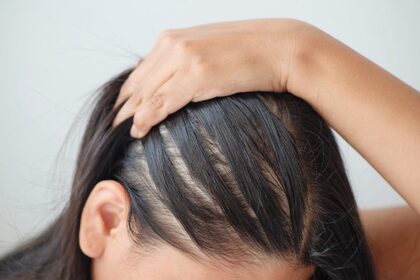
Hair thinning refers to a gradual reduction in hair density, i.e., when individual strands become finer and overall volume reduces. Unlike sudden hair shedding, thinning happens slowly and often goes unnoticed until significant density is lost.
It may appear as:
➤ A widening partition
➤ Receding hairline
➤ Visible scalp under bright light
➤ Reduced ponytail thickness
➤ Diffuse thinning across the crown
Hair thinning can affect both genders but the patterns differ.
Hair Thinning Causes: Why Is My Hair Getting Thinner?
Genetics
The most common reason causing thinning hair in men, is androgenetic alopecia (male pattern baldness). Women can also experience hereditary thinning.
Hormonal Imbalance
➤ PCOS
➤ Thyroid disorders
➤ Postpartum changes
➤ Menopause
Hormonal shifts are a leading factor for thinning hair in women.
Nutritional Deficiencies
Hair requires protein, iron, zinc, vitamin D, and B-complex vitamins to maintain strength and growth. Even mild deficiencies can gradually weaken follicles, making them susceptible to thinning.
Stress & Lifestyle
Chronic stress increases cortisol, pushing hair into the shedding phase prematurely.
Scalp Disorders
Dandruff, inflammation, fungal infections, and oily scalp congestion weaken follicles.
Chemical & Heat Damage
Frequent coloring, straightening, rebonding, and tight hairstyles can lead to gradual thinning.
Thinning Hair Men vs Thinning Hair Women: What’s the Difference?
Men
➤ Receding hairline
➤ Crown balding
➤ M-shaped pattern
➤ Genetic dominance
➤ Often linked to DHT sensitivity
Women
➤ Diffuse thinning
➤ Wider middle partition
➤ Hairline usually preserved
➤ Often linked to hormonal or nutritional issues
Do Home Remedies for Thinning Hair Really Work?
The internet is filled with natural solutions such as onion juice, rosemary oil, aloe vera masks, coconut oil massages. But do they genuinely reverse thinning? Home remedies may improve mild scalp dryness, enhance temporary shine, boost superficial blood circulation. However, they cannot reactivate dormant follicles, reverse genetic miniaturization, form new hair follicles, correct deep hormonal imbalance. Home care is supportive, not corrective. It works best alongside clinical treatment
How to Stop Hair Thinning: Is It Reversible?
The reassuring answer is that thinning can often be slowed, stabilized, and in many cases reversed — provided follicles are still alive. Hair regrowth depends on three major factors: early intervention, accurate diagnosis, and targeted treatment.
Randomly switching shampoos or experimenting with internet remedies rarely yields sustainable results. Instead, a structured approach involving scalp analysis, identification of underlying causes, internal correction, and appropriate therapy significantly improves outcomes. It reflects internal imbalance, scalp health, and cellular vitality. Addressing all three dimensions produces lasting improvement.
Food, Diet, and Supplements for Thinning Hair
Nutrition forms the biological foundation of hair growth. Hair is composed primarily of keratin, a protein that requires amino acids for synthesis. Without adequate protein intake, growth weakens.
Iron deficiency is one of the most overlooked reasons for thinning hair, especially in women. Low iron reduces oxygen supply to follicles, leading to gradual weakening. Vitamin D regulates hair cycling, while zinc supports follicular repair.
Supplementation becomes essential when dietary intake or absorption is insufficient. Specialized formulations such as Hair Vital, Invacare Kit, and Trichoflax are designed to complement clinical therapies by strengthening follicles internally.
For patients with significant deficiencies or poor nutrient absorption, IV infusion therapy provides a more direct solution. Unlike oral supplements that lose potency during digestion, IV therapy ensures complete absorption and faster biological correction.
Hair Thinning Treatments
Photobiostimulation Hair Growth Therapy (PBS)
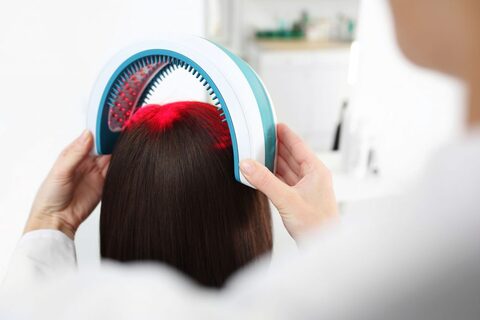
Photobiostimulation Hair Growth Therapy combines Optical, Biological, Thermal, and Electro energies to stimulate follicles and improve scalp circulation. Nano actives penetrate deeply, creating an optimal environment for sustainable regrowth.
Highlights: Completely painless, non-invasive with no downtime, suitable as a lunchtime therapy
Best Suited For: Early-stage thinning, busy professionals, sensitive scalps
Biocell Hair Growth Therapy
Biocell is a plant-based advanced therapy using Argan stem cells, growth factors, biomimetic peptides, and cosmeceuticals to restore scalp health and activate dormant follicles.
Highlights: Plant stem cell technology, controls severe hair fall, non-surgical & safe
Best Suited For: Early balding, hormonal thinning, women with PCOS-related shedding
Clinical Hair Revive Therapy (CHRT)
CHRT rejuvenates follicles using peptides and growth factors that penetrate deep into the scalp to reduce inflammation and reactivate growth cycles.
Highlights: Targets follicular inflammation, enhances density gradually, non-invasive procedure
Best Suited For: Diffuse thinning, stress-induced hair fall, fost-illness recovery
Hair Rejuvenation Therapy (HRT)
A therapeutic blend of aromatic oils, protein packs, ozone therapy, massage, scrubbing, and high-frequency stimulation that improves scalp health.
Highlights: Controls dandruff, reduces scalp dryness, visible relief often from first session
Best Suited For: Scalp disorders, oily or flaky scalp, thinning triggered by inflammation
PRP Hair Treatment (Platelet-Rich Plasma)
PRP uses your body’s own growth factors to stimulate hair regrowth. Advanced centrifugation and AI scalp analysis improve precision in planning the outcomes.
Highlights: Minimally invasive, natural growth stimulation, non surgical
Best Suited For: Thinning crown, early genetic hair loss
GFC Hair Treatment
Growth Factor Concentrate therapy delivers a higher concentration of purified growth factors compared to traditional PRP.
Highlights: Higher potency, faster response, long-lasting improvement
Best Suited For: moderate thinning, PRP non-responders, early-stage balding
ExoGro Hair Therapy (Autologous Exosome Treatment)
Exosome Hair therapy represents next-generation regenerative medicine, delivering powerful cellular communication signals to revive follicles.
Highlights: Advanced regenerative science, Early reduction in shedding may be observed within a few weeks; visible density improvement typically develops over 2–3 months
Best Suited For: Urgent result seekers, Severe thinning, post-transplant support
Cell Graft Therapy
A regenerative breakthrough capable of follicle neogenesis — forming new follicles using progenitor cells combined with PRP.
Highlights: Forms new follicles, 100% natural & non-surgical
Best Suited For: Advanced thinning, Patchy bald areas
Activated Follicular Transplantation 2.0 (AFT 2.0)
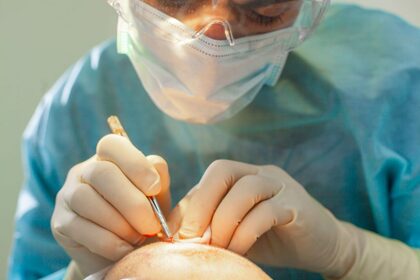
A next-generation hair transplant where follicles are activated in growth-factor medium before implantation, enhancing survival and density.
Highlights: Maximum graft survival, faster healing and natural-looking hairline
Best Suited For: Balding and receding hairline
Latest IV Hair Therapy: Faster Internal Correction
IV infusion therapy delivers vitamins, amino acids, and antioxidants directly into the bloodstream, ensuring 100% absorption. VCare’s tricho-formulated IV blends include:
➤ Tricho Nutra – Biotin, Zinc, B-Complex
➤ Tricho Pro – ATP & Vitamin C
➤ Tricho Met – L-Carnitine & Magnesium
➤ Tricho Det – Detox antioxidants
➤ Tricho Plus – 6-session accelerated program
Conclusion: Why Expert Diagnosis Matters
Hair thinning is not just cosmetic — it reflects scalp health, hormonal balance, nutrition, and genetic patterns. While home remedies and supplements may support mild thinning, advanced thinning requires clinical evaluation.
At VCare, 21+ years of trichology expertise combined with AI scalp analysis, regenerative therapies, and customized home-care ensures that treatment targets the root cause — not just the symptom.
From non-invasive lunchtime therapies to regenerative cell-based innovations and next-generation transplants, solutions are personalized based on your scalp condition, lifestyle, and long-term goals.
The most important step?
Don’t self-diagnose. Don’t delay.
Early expert consultation can protect your follicles, restore density, and rebuild confidence — naturally, safely, and sustainably.